
Borrowed Courage
What happens when a reader steps into a story—and doesn’t come back the same

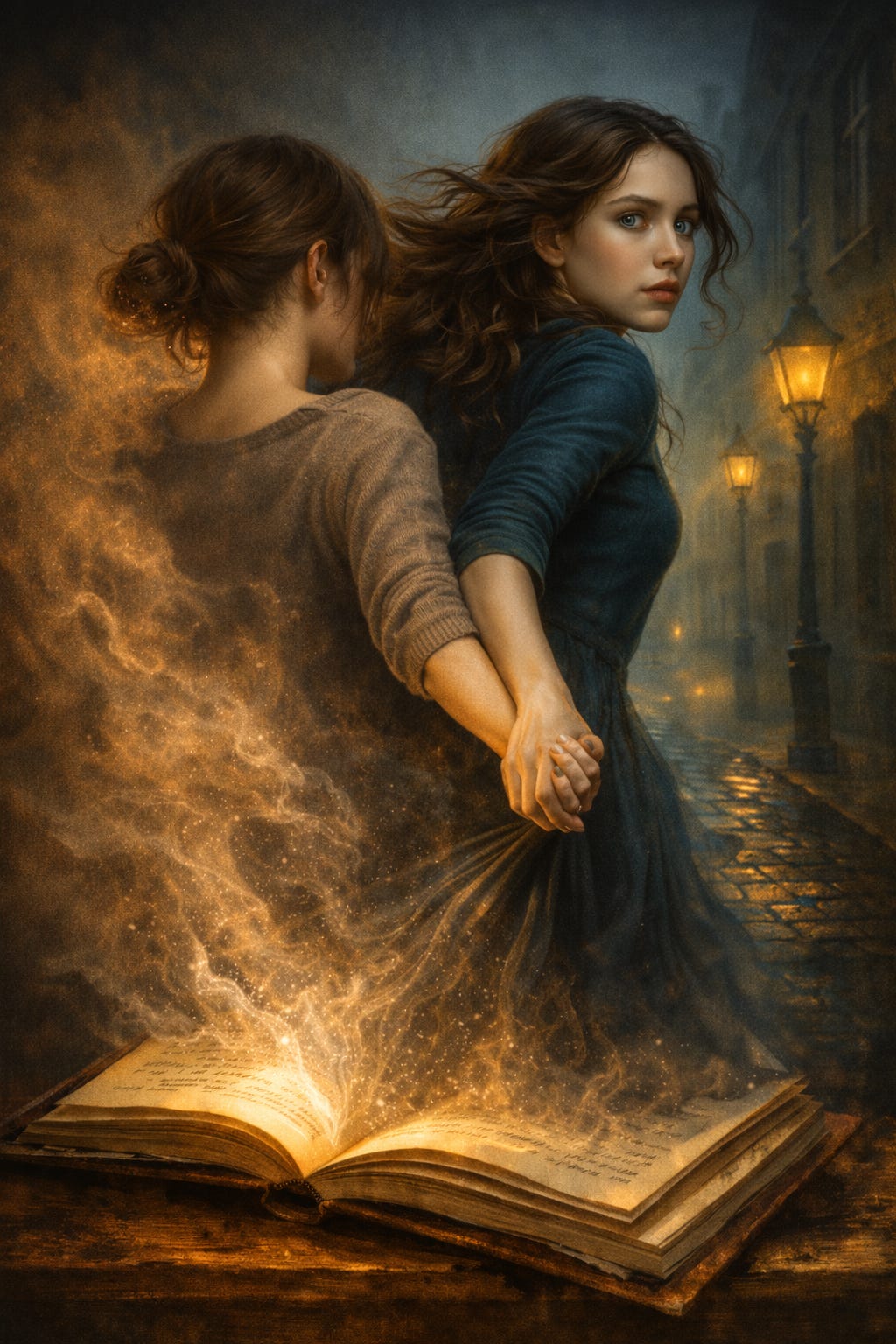
People write for many reasons—joy, obsession, curiosity, love—but beneath all of that is something more durable: connection. Writing is how we pass ideas hand to hand across time and distance. It’s how we say you’re not alone without ever speaking out loud.
That is precisely why literature has always unsettled those who seek control.
Stories are difficult to police. They slip past borders and uniforms. They don’t announce themselves as arguments; they arrive as companions. A book doesn’t tell you what to think—it invites you to feel. And once someone has felt injustice through a character they love, it becomes much harder to convince them that injustice is normal, necessary, or deserved.
This is why authoritarian systems fear books. Not because every novel is overtly political, but because stories preserve imagination. They keep alive the idea that things could be otherwise. They remind us—quietly, persistently—that cruelty is a choice and that resistance, even small resistance, is possible.
We see ourselves in our favorite characters. Or we see the selves we wish we were: braver, more defiant, more compassionate. Fiction gives us representatives—stand-ins we can inhabit for a while. Through them, we experience courage without immediate consequence, and that experience lingers. It shapes us. It prepares us.
This kind of preparation is hard to measure and nearly impossible to suppress. You can ban a slogan. You can arrest a protester. But how do you erase a moment that made someone think, I would have done the same thing?
History offers plenty of examples. During times of upheaval, fiction has often carried values that were too dangerous to express directly. Stories about heroes, outcasts, rebels, and survivors have long served as vessels for empathy and moral clarity. They fly under the radar longer—not because they are harmless, but because their power is subtle. By the time a story is recognized as a threat, it has already done its work.
The Handmaid’s Tale – Margaret Atwood: Not prophecy—warning. A study in how quickly rights vanish when people are told it “won’t happen here.”
Beloved – Toni Morrison: A masterclass in refusing historical erasure. Trauma given voice, shape, and dignity.
The Fifth Season – N.K. Jemisin: Rage, grief, and survival in a system designed to break you—told from the inside.
The Left Hand of Darkness – Ursula K. Le Guin: A quiet dismantling of gender norms and rigid power structures through anthropology-as-fiction.
Writing is also communal in a way that frightens centralized power. Readers may never meet, may never know each other’s names, but they recognize one another through shared stories. A book passed hand to hand, discussed in a quiet group, or praised in a guarded review creates a network of understanding. A community without membership lists. A movement without a leader.
This is the space I write into.
My Shadow Runner / Shadow Hunter series wasn’t born from a desire to lecture or persuade, but from the conviction that stories can model resistance in human terms. Through Ada—a character who refuses to look away, who absorbs pain rather than surrender her empathy—I explore what it means to resist not because victory is guaranteed, but because silence costs more. Her defiance is often small, often punished, and rarely rewarded. But it matters. To her, and—if I’ve done my job—to the reader.
I believe stories like this matter now more than ever. Not as propaganda, but as reminders. That bravery can be quiet. That endurance is a form of rebellion. That even when systems feel immovable, individuals still choose how they treat one another.
Writing cannot topple regimes on its own. But it can keep something alive that oppression depends on killing: the belief that cruelty is not inevitable, and that dignity is worth defending.
That is why literature is dangerous.
That is why it is banned.
And that is why we keep writing.
Silencing human expression is a special kind of evil. Good thing it won’t work.
This just hits like a hammer! So well said. This is why we need literature, crave it, love it, and fight for it.